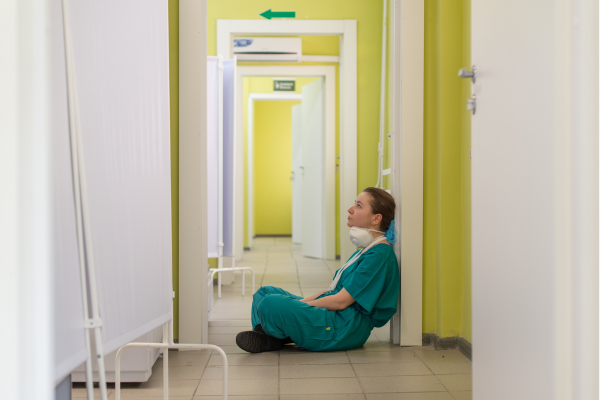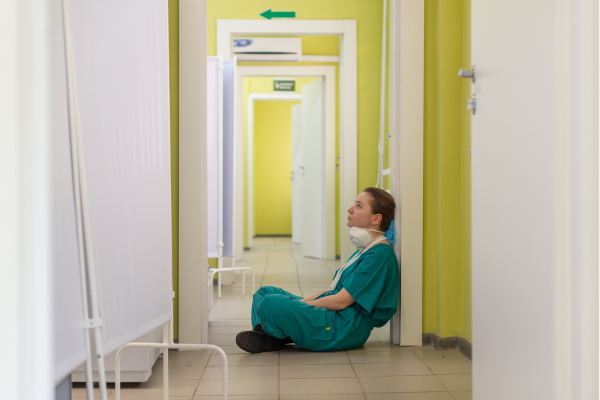
Caring for people with ill health or diminishing capacities is deeply meaningful work, but it is also emotionally and physically demanding. Whether in hospitals, care homes, or community settings, the rigours of the job can take their toll on the mental health of those who deliver care every day.
There is no single or simple solution to such a complex issue. However, one contributing factor remains surprisingly under-discussed… hydration. Supporting better hydration among health and social care staff is not a cure-all, but it is a small, practical step that can make a difference to mental health.
We’re not clinicians or mental health experts at CWS, but as a company working closely with the care sector, we’ve taken time to review research and insights surrounding staff wellbeing and hydration. Our aim in this article is simply to share findings we hope will be useful.
Is there a mental health crisis in UK health and social care?
Worker mental health is one of the most pressing issues impacting the care sector today. According to recent research, human health and social work roles have the highest rate of depressed, stressed, and anxious employees in any industry in the UK.
Interestingly, the research also found that professionals in the care sector show the highest rate of workplace illness of all industries, with an average of 6,860 incidents per 100,000 workers. This highlights the link between the mental health of workers and the operational efficiency of health and social care facilities.
Carers UK’s 2025 State of Caring report reveals that over a third of carers struggle with ‘bad’ or ‘very bad’ mental health, a 7% year-on-year increase, and that 57% of survey respondents claimed to ‘often’ or ‘always’ feel overwhelmed.
When surveyed in 2024, NHS staff reported similar issues - 76% endured a mental health condition at some point the previous year. That’s 3 in every 4 NHS workers! Furthermore, 68% of those surveyed confided that morale was lower than they had ever experienced before, and 70% cited stress at work as a trigger for poor mental health.
The link between hydration and mental health - and how it relates to the current state of care
Important to note, healthy hydration is not the underlying cause or complete solution for poor mental health, but research shows that it is a factor.
When read together, a 2018 study and a 2024 study, suggest that lower water intake increases the likelihood of anxious and depressed feelings, or even suicidal thoughts.
Water is essential for maintaining the brain’s normal function, so when hydration levels drop, the body responds in ways that place extra strain on mental wellbeing:
Hormonal imbalances
Low water intake can trigger excess production of cortisol, commonly referred to as the stress hormone. All the while, the production “happy hormones”, such as dopamine, serotonin, and oxytocin, starts to drop off.
Fight or flight response
With happy hormones in short supply, feelings of sadness and lethargy are common, but it gets more complicated than that. With cortisol production in overdrive, the fight-or-flight response is triggered, often resulting in anxious feelings that may coincide with an increased heart rate, panicked breathing, muscle tension, and other concerning symptoms.
Lower cognitive performance
When you become dehydrated, your body loses more water than it takes in. Because electrolytes are dissolved in that water, dehydration changes their concentration, disrupting the balance your body depends on for good cognitive performance.
Attention, learning ability, decision-making, reaction times and memory are all affected, creating that “brain fog” feeling, which easily feeds into low mood by:
- Making tasks feel more difficult, increasing workload stress
- Lowering confidence levels
- Increasing feelings of frustration
Overall, an existing sense that you’re not quite coping can become much more pronounced.
> Related - Learn more about how dehydration affects the body.
Hydration levels in health and social care settings
According to information gathered by Hydrate the Nation, it’s common for NHS workers to suffer dehydration during their shifts, with hectic work schedules distracting from basic needs such as drinking enough water.
In fact, a Medical Protection survey found that around 40% of NHS doctors feel unable to take a break during the workday to eat or drink.
Similar is true of social care workers, with one first-hand account suggesting there’s only time for two drinks per shift, with shifts sometimes lasting upwards of 12 hours.
> Related - Find out how care homes can encourage better hydration among residents.
So, the question is… what can be done?
Making hydration easier for busy care staff
In health and social care environments, improving hydration isn’t just about encouraging people to drink more; it’s about removing the obstacles that make drinking difficult in the first place.
1. Hydration needs to be quick, convenient, and close by
When workers don’t have easy access to drinking water, they’re far less likely to stop and hydrate, especially during fast-paced clinical or care tasks. Strategically placed water dispensers in staff areas, corridors, nurses’ stations, and communal rooms allow team members to grab a drink in seconds, not minutes.
2. Appealing, great-tasting water encourages regular drinking
Many care settings rely on old taps or outdated water coolers that produce inconsistent temperatures or unappealing taste. Staff are far more motivated to hydrate when water is cold, fresh, and reliably pleasant to drink.
As part of our services, we offer flexible managed maintenance plans to keep hydration points in top working condition and the water tasting great. Learn more about our hassle-free approach to hydration.
3. Infection-control-friendly hydration is essential
Traditional shared jugs, refillable bottles left on wards, or outdated coolers aren’t hygienic enough for modern standards. Healthcare-specific water dispensers with touch-free or low-contact controls, protected dispense areas, sealed filtration systems, and antimicrobial surfaces can help keep hydration safe and appealing.
4. Fast-flow, high-capacity systems support shift patterns
Care workers often drink in short windows of opportunity. Water dispensers designed for healthcare environments offer fast dispense rates and high output, meaning staff don’t have to queue, wait, or skip hydration because the system is slow or temporarily empty. This reliability is particularly valuable during shift changes and peak activity periods.
Hydrate health and social care with CWS
Supporting staff wellbeing in health and social care settings is a complex challenge, but easy access to appropriate water dispensers can be a small yet meaningful part of potential solutions.
To make things easier, we’ve brought together all water systems suitable for care facilities in one place. Explore our range of water dispensers for care settings to find the perfect fit for your facilities and staff.
We’re happy to help with any queries or concerns you may have. Simply contact us to discuss your needs, and we’ll guide you to the best-suited system.